APsystems Previews EZBay-2 Battery for U.S. Plug-In Solar at RE+
By PlugInSolarUS Editorial Team · Published 2026-11-23 · Updated November 20, 2026 · 7 min read
APsystems introduced EZBay-2 at RE+ as a coming-soon battery designed to pair with EZ1. Its storage potential is promising, but AC output, availability and outage capability need careful distinctions.
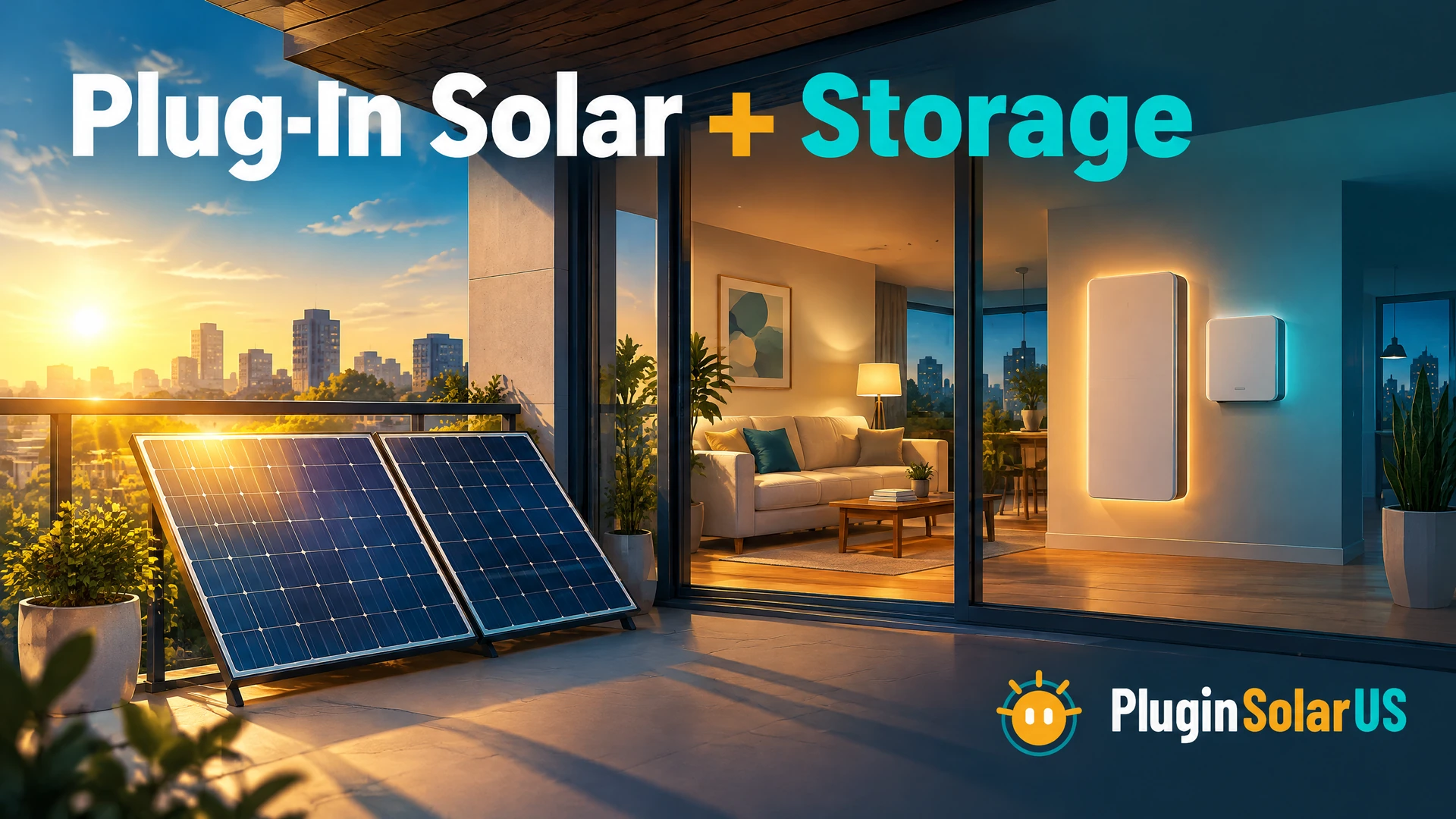
APsystems has previewed a battery designed to bring stored solar energy to its U.S. plug-in solar ecosystem. In its November 18, 2026, RE+ announcement, the company introduced EZBay-2 as a plug-in solar battery system designed to pair with the EZ1 microinverter. The manufacturer’s message is ‘coming soon’—not an announcement that the battery is already available to order. [1] [2]
The preview followed APsystems’ November 16 notice promoting EZ1 demonstrations at RE+ in Las Vegas, November 17–19. It puts a new storage option alongside a microinverter platform already marketed in the United States, rather than introducing an entirely separate household solar system. [3]
Independent reporting in February covered APsystems’ direct U.S. sales of EZ1-LV. That establishes the existing platform’s market context; it does not validate the new battery’s performance. Readers looking for the inverter’s broader background can start with our APsystems EZ1 brand review. The new development here is the proposed storage pairing. [4]
EZBay-2 sits between the panels and the microinverter
APsystems’ official brochure identifies the product as the APstorage-branded EZBay-2 Balcony Solar Battery System. Its diagram shows solar modules feeding EZBay-2, followed by an EZ1 microinverter and then the power-cord connection. In that arrangement, storage is on the direct-current, or DC, side of the inverter. The microinverter remains the device that converts DC into household alternating current, or AC. [5]
That architecture matters more than the presence of a battery alone. EZBay-2 is described as a dedicated partner for EZ1, and the brochure says its DC output voltage is matched to the EZ1-LV curve. This is not evidence that it works with every microinverter, every EZ1 revision or a third-party plug-in solar kit. The exact supported equipment and final setup requirements still need product-specific documentation. [5]
The brochure lists two solar inputs with two maximum power point trackers, which manage power collection from the connected panels. It also lists two DC outputs toward the microinverter. Those are manufacturer specifications for the battery’s interfaces, not permission to combine arbitrary panels or modify an existing system. Our guide to AC and DC battery coupling explains the broader design differences without treating any one architecture as automatic backup. [5]
Three headline numbers describe three different things
The RE+ announcement highlights capacity, solar input and output to the inverter. The brochure gives the distinctions needed to read those figures correctly: [1] [5]
- 1.92 kWh nominal battery energy: the stated storage capacity, not a verified amount of usable AC energy delivered to household appliances.
- 1,600 W maximum solar input: two inputs rated at up to 800 W each. This describes the battery’s solar-input rating, not household AC output or a promise of continuous solar production.
- 1,200 W maximum DC output: two outputs rated at up to 600 W each, feeding the separate microinverter. It is not a 1,200 W AC outlet rating.
The existing U.S./Canada EZ1-LV datasheet specifies nominal 120 V AC, 60 Hz operation and a maximum continuous output of 900 VA. VA is the inverter’s AC apparent-power rating; it should not be replaced by the battery’s higher DC wattage figure. The final system’s AC delivery remains subject to the supported inverter and its operating limits. [6]
Likewise, the battery’s nominal 19.2 V is an internal DC specification, not the voltage of a household outlet. Keeping these labels separate avoids a misleading impression that adding storage raises an existing inverter’s AC rating. More solar-input capacity and stored energy can offer different operating possibilities, but they are not the same as more AC power. [5] [6]
APsystems specifies lithium iron phosphate, often called LFP, chemistry and a 90% depth of discharge. Neither figure establishes delivered usable AC energy or round-trip efficiency for the complete pairing. Those values would require the applicable operating limits and conversion losses. Our home-battery capacity and chemistry explainer can help readers compare those measurements when final documents arrive. [5]
The opportunity is using solar at a more useful time
The appeal of this preview is straightforward: a small solar installation could become less dependent on using all its energy at the moment the panels produce it. APsystems describes storage and scheduled use for the EZ1 pairing. For a household whose solar production and electricity use occur at different times, that is a useful capability to explore—not a demonstrated savings result. [5]
Consider a home that has spare midday production but more electricity use after its occupants return in the evening. A compatible battery could shift some energy toward that later demand. A different home that already consumes its solar production during the day may have less surplus to store. These are household-use examples, not measured EZBay-2 results or forecasts of how much any buyer will save.
Before assigning a dollar value to that opportunity, buyers need the final price, usable energy and control behavior. In particular, the preview does not establish how the battery’s schedules will interact with APmeter, firmware or any existing export-control configuration. Those details will help determine whether the proposed pairing fits a household’s actual consumption pattern. The brochure also leaves expansion unspecified, so the preview should not be read as a promise of a larger modular battery system. [5]
Stored energy is not a verified blackout-power feature
APsystems’ brochure landing page uses ‘DIY Battery Backup’ wording, but the documented hardware path is DC output into EZ1. The brochure does not provide a standalone AC outlet, an emergency-output rating or a documented transfer design for powering a home during an outage. Those missing functions are consequential if backup is the reason someone wants a battery. [5]
APsystems’ current EZ1 consumer FAQ says the grid-tied inverter shuts down when grid power fails and recommends non-backup outlets. The EZBay-2 preview therefore should not be treated as proof that an EZ1 installation can supply appliances during a blackout. Our anti-islanding explainer covers why a grid-connected inverter stops supplying power when the grid goes down. [7]
The same FAQ warns against directly powering EZ1 from an arbitrary battery, citing potential failure and warranty consequences. The new announcement describes a dedicated matched product; it does not overturn that warning or invite a homemade battery-to-inverter connection. Anyone considering an upgrade should wait for the exact supported configuration rather than improvise from the preview diagram. [7] [5]
What would turn this preview into a purchase-ready option?
Availability is the first missing piece. In the official materials checked November 20, APsystems says ‘coming soon,’ without a firm order or shipment date. A retail price was not established either. The practical milestone to watch is a dated sales announcement with the final product documents—not an inferred release window. [1] [5]
Certification needs more detail, too. The battery brochure’s certification row says only ‘UL,’ while its standards field is unspecified. That does not establish a particular certification standard, a verified battery listing or approval of the complete EZBay-2/EZ1 combination. Inverter-specific certification applies only to the inverter unless documentation expressly covers the paired system. [5]
A final installation manual should identify supported inverter models and revisions, required controls and the permitted connection arrangement. Warranty documents should also explain coverage and conditions: the brochure combines ‘Warranty / Design Life’ in a ten-year row, which is not a substitute for the warranty contract. Its specifications are expressly subject to change. These are useful documents to request before committing money to a new storage accessory. [5]
Our spec-by-spec buyer’s guide provides a way to compare those final answers. For now, EZBay-2 is an encouraging manufacturer preview of storage for the existing U.S. EZ1 ecosystem. Its clearest potential benefit is more flexible use of solar energy while the grid is operating. Price, final compatibility and complete-system documentation will determine when that idea becomes a practical option for a particular home.
Related Articles
- Home Solar Batteries, Explained: LFP vs. NMC, Usable kWh, and What Makes a Battery Last — A practical guide to comparing LFP and NMC batteries without reducing durability to a cycle-count claim. Learn what usable kWh, temperature, warranty terms, and system design mean for a battery’s real-world life.
- How Solar Batteries Connect: AC vs. DC Coupling and Portable Power Stations — AC and DC coupling describe how solar and batteries share power, but they do not by themselves create backup. Learn how portable power stations, home batteries, inverters, and transfer equipment differ.
- Brand Review: APsystems — The Multi-Module Microinverter Pioneer Enters Plug-In Solar — APsystems pioneered multi-module microinverter technology in 2010 and now brings that expertise to plug-in solar with the EZ1 series. We review the company's 15-year track record, the EZ1's specifications, and how APsystems' zero-export metering approach addresses a key grid concern for plug-in solar.
Sources
- APsystems USA: RE+ day two—Introducing EZBay-2 to the U.S.; November 18, 2026; checked November 20, 2026
- APsystems USA: Introducing EZBay-2 to the U.S.—official dated Facebook announcement; November 18, 2026
- APsystems USA: Heading to RE+ 2026? Come meet the APsystems team in Vegas!; November 16, 2026
- pv magazine USA, Ben Zientara: APsystems opens direct U.S. sales of EZ1 microinverter for DIY plug-in solar; February 10, 2026
- APsystems official EZBay-2 brochure landing page; APstorage Balcony Solar Battery System brochure dated September 30, 2026, Rev1.0; checked November 20, 2026
- APsystems EZ1-LV official USA/Canada datasheet; March 18, 2024, Rev1.0
- APsystems USA: EZ1 consumer FAQs and safety information; undated page checked November 20, 2026