Homeowner's Guide to Plug-In Solar: When It Makes Sense (and When It Doesn't)
By PlugInSolarUS Editorial Team · Published 2026-03-28 · Updated October 1, 2026 · 21 min read
Plug-in solar is not just for renters. Here is when homeowners should consider plug-in solar instead of — or in addition to — rooftop solar.
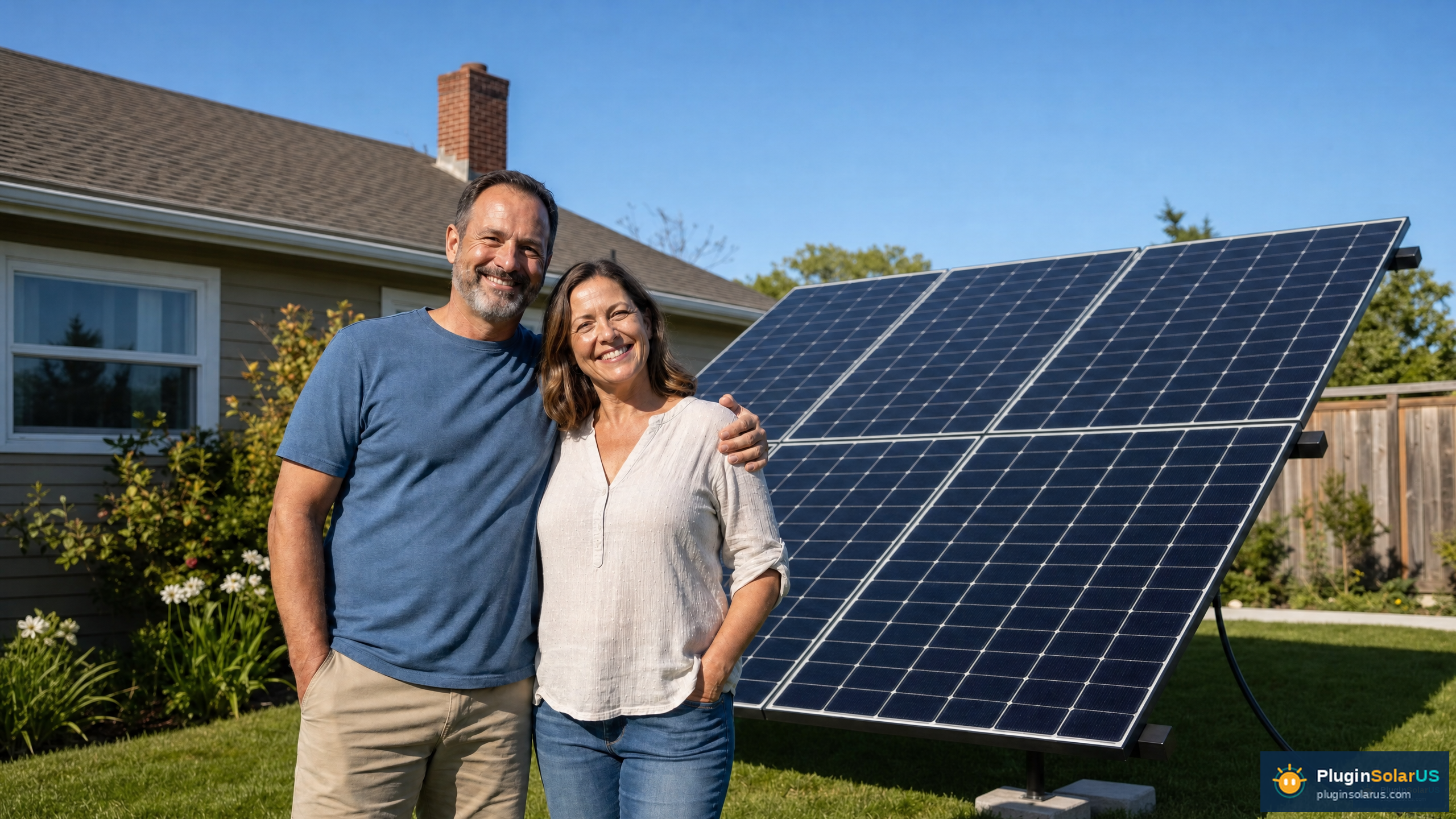
Homeowner's Guide to Plug-In Solar: When It Makes Sense (and When It Doesn't)
As a homeowner, the idea of harnessing solar energy to power your home is undoubtedly appealing. However, traditional rooftop solar installations can be a significant undertaking, often involving substantial upfront costs, complex permitting processes, and long installation times. This is where plug-in solar systems emerge as an attractive alternative, offering a more accessible and flexible entry point into renewable energy. These systems are designed for simplicity, allowing homeowners to generate their own electricity with minimal fuss, often without the need for professional installation.
The appeal of plug-in solar lies in its "DIY" nature and scalability. Unlike large-scale rooftop arrays that require permanent fixtures and extensive electrical work, plug-in systems are typically modular and can be expanded over time. This flexibility makes them particularly suitable for homeowners who might be hesitant to commit to a full rooftop installation or who have specific constraints that make traditional solar less viable. They offer a tangible way to reduce electricity bills and contribute to a greener environment, all while maintaining a degree of control and adaptability that larger systems often lack.
This guide will delve into the nuances of plug-in solar for homeowners, exploring the scenarios where it truly shines and those where it might not be the most optimal choice. We'll cover everything from system sizing and electrical requirements to navigating homeowner association (HOA) rules and understanding permitting. Our goal is to equip you with the knowledge needed to make an informed decision about whether plug-in solar is the right energy solution for your home, helping you understand its benefits, limitations, and how it integrates with your existing energy landscape.
Why Homeowners Are Choosing Plug-In Solar Over Rooftop
Many homeowners are increasingly turning to plug-in solar as a viable alternative or complement to traditional rooftop installations. The primary driver for this shift is often the ease of installation and the significantly lower barrier to entry. Rooftop solar typically demands a substantial investment, requiring professional installers, structural assessments, and often a lengthy bureaucratic process involving permits and utility approvals. Plug-in solar, by contrast, can often be set up by the homeowner themselves, plugging directly into an existing GFCI outlet, much like any other appliance.
Another compelling reason is the flexibility and portability that plug-in systems offer. For homeowners who might move in the future, a plug-in system can often be disassembled and relocated, preserving their investment. This is a stark contrast to rooftop systems, which are permanent fixtures of the property. Furthermore, plug-in solar allows for a gradual adoption of solar energy. Homeowners can start with a smaller system to test its effectiveness and then expand their setup as their energy needs or budget allows, providing a scalable path to greater energy independence.
The reduced complexity also translates to fewer regulatory hurdles in many areas. While some permitting may still be required depending on local ordinances and system size, it is generally less onerous than for full rooftop installations. This streamlined process, combined with the immediate gratification of seeing energy generation begin almost instantly, makes plug-in solar an attractive option for those seeking a more agile and less committal approach to solar power. It empowers homeowners to take direct action in reducing their carbon footprint and electricity bills without the extensive planning and execution associated with larger projects.
When Plug-In Solar Makes Sense for Homeowners
Plug-in solar is not a one-size-fits-all solution, but it excels in several specific scenarios for homeowners. Understanding these situations can help you determine if this technology aligns with your particular circumstances and energy goals. It offers a unique blend of accessibility and efficiency that can be highly beneficial when traditional solar options are less feasible or desirable.
Roof Not Suitable or Limited Space
One of the most common reasons homeowners opt for plug-in solar is when their roof is unsuitable for a traditional installation. This could be due to structural issues, excessive shading from trees or neighboring buildings, an unfavorable roof angle, or simply a lack of sufficient usable roof space. In such cases, plug-in solar panels can be deployed in a yard, on a patio, or even on a balcony, allowing homeowners to still capture solar energy without relying on their roof. This ground-mounted flexibility opens up solar access to a much wider demographic.
Furthermore, some homeowners may have aesthetic concerns about placing panels on their roof, or their property might be subject to strict architectural guidelines that prohibit visible rooftop installations. Plug-in systems, being more discreet and often portable, can circumvent these issues. They provide a way to integrate solar power into the home environment without altering the exterior appearance of the house significantly, offering a compromise between energy independence and property aesthetics.
For properties with limited available space, plug-in solar offers a modular solution. Instead of needing a large, contiguous area, smaller, independent panels can be placed strategically to maximize sun exposure throughout the day. This adaptability ensures that even homes with challenging layouts or restricted outdoor areas can still benefit from solar energy generation, making renewable power accessible where it might otherwise be impossible.
Renting Out a Property
Homeowners who rent out a portion of their property, such as a basement apartment, an accessory dwelling unit (ADU), or even a single room, can find plug-in solar to be an ideal solution. Installing a full rooftop system on a rental property can be complicated, especially when trying to allocate energy generation and costs fairly between different tenants or between the landlord and tenant. Plug-in solar allows for a more direct and often isolated energy supply to a specific unit or appliance, simplifying billing and energy management.
Moreover, for landlords looking to make their rental properties more attractive and energy-efficient without a major overhaul, plug-in solar offers a low-impact upgrade. It can help reduce the electricity bills for tenants, making the rental more appealing and potentially justifying a slightly higher rent. The ease of installation and removal also means that if the property use changes, or if the system needs maintenance, it can be managed with minimal disruption to tenants or the property structure.
This approach also provides a clear delineation of energy consumption. A plug-in system can be dedicated to powering specific loads within the rental unit, such as a mini-split AC unit or a set of appliances, making it easier to track the direct impact of solar generation. This transparency can be a significant advantage for both landlords and tenants, fostering a clearer understanding of energy usage and savings.
Testing Before a Full Installation
For homeowners who are curious about solar but are not yet ready to commit to a full rooftop installation, plug-in solar serves as an excellent entry point for testing the waters. It allows individuals to experience firsthand how solar energy works, understand their energy consumption patterns, and evaluate the actual savings before making a larger financial and structural commitment. This "try before you buy" approach can alleviate concerns and build confidence in solar technology.
By starting with a smaller plug-in system, homeowners can gain valuable insights into their home's energy needs and how solar generation offsets those needs. They can monitor production, observe how it impacts their electricity bill, and learn about the practicalities of living with solar power. This hands-on experience is invaluable for making an informed decision about whether to scale up to a larger rooftop system in the future, ensuring that any subsequent investment is well-justified and tailored to their specific requirements.
Furthermore, a plug-in system can act as a stepping stone, allowing homeowners to gradually transition to greater energy independence. It provides immediate benefits in terms of reduced electricity costs and a smaller carbon footprint, while simultaneously serving as an educational tool. This incremental approach minimizes risk and allows for a more thoughtful and strategic adoption of solar energy, empowering homeowners to become more knowledgeable and confident solar users.
When Plug-In Solar Doesn't Make Sense
While plug-in solar offers numerous advantages, there are specific situations where it may not be the most efficient or cost-effective solution for homeowners. Understanding these limitations is crucial for making an informed decision and ensuring that your investment in solar technology yields the best possible returns. It's important to weigh the benefits against the potential drawbacks in the context of your unique energy profile and property characteristics.
Already Have Rooftop Solar — With Caveats
If you already have a comprehensive rooftop solar system that fully covers your household load, adding a plug-in system for pure bill-savings purposes may offer diminishing financial returns. The primary energy demands are already being met, and the incremental savings from a small plug-in addition may not justify the additional cost. In that narrow scenario, expanding your existing rooftop array or investing in a larger battery bank is usually the more efficient path.
However, there are two situations where homeowners with existing rooftop solar should seriously consider a plug-in system as a complement:
Expanding capacity without a full re-quote. Rooftop solar expansions often require a new structural assessment, updated permits, and a return visit from an installer — a process that can cost thousands before a single new panel is added. A plug-in system lets you add 400–1,200W of generation in an afternoon, at a fraction of the cost, without touching your existing roof installation. This is particularly attractive if your rooftop array is already at the edge of your inverter's capacity, or if you've recently added a high-draw appliance like an EV charger or heat pump.
Creating a battery-backed resilience circuit. Most grid-tied rooftop systems shut down automatically during a power outage — a safety requirement known as anti-islanding. A plug-in system with integrated battery storage operates independently of the main panel and remains live during outages, powering a dedicated circuit (refrigerator, medical equipment, phone charging) even when the rooftop array is offline. This makes plug-in solar a practical and affordable resilience layer for homeowners who already have rooftop solar but lack whole-home battery backup.
Very Low Electricity Rates — With an Important Caveat
The financial payback period for any solar investment is heavily influenced by local electricity rates. In regions where rates are exceptionally low — say, below $0.10/kWh — the bill savings alone may not justify the upfront cost of a plug-in system, and payback could stretch well beyond the national average of 5–7 years. If your sole motivation is reducing your monthly electricity bill, very low rates make the math harder.
That said, electricity rates are not static. Rates in the US have risen an average of 3–4% per year over the past decade, and many low-rate areas are seeing accelerating increases as utilities invest in grid hardening, wildfire mitigation, or transmission upgrades. A system purchased today in a low-rate area may look significantly more attractive in five years.
More importantly, energy resilience is a compelling reason to install plug-in solar even where rates are low. Homeowners in rural areas, regions prone to severe weather, or communities with aging grid infrastructure often face longer and more frequent outages than urban counterparts — regardless of what they pay per kilowatt-hour. A plug-in system with battery storage provides backup power for essential loads (refrigerator, medical devices, lighting, phone charging) that has real value independent of the electricity rate. If grid reliability is a concern for your household, the resilience case for plug-in solar stands on its own merits even when the financial payback is modest.
The bottom line: very low rates should prompt you to run the numbers carefully and weigh resilience value alongside bill savings — not automatically rule out plug-in solar.
Short Planning Horizon
Plug-in solar systems typically reach payback in 5–7 years at national average electricity rates, and 3–5 years in high-rate states. If you plan to sell your home within the next two to three years, you may not recoup the investment before the sale — and unlike rooftop solar, which is a recognized home value add-on in most markets, a portable plug-in system is personal property that typically moves with you rather than transferring to the buyer. If a near-term sale is likely, weigh whether you'd take the system with you or leave it, and plan accordingly.
Severely Shaded Outdoor Space
Plug-in solar's key advantage over rooftop is placement flexibility — but that flexibility only helps if you have a reasonably sunny location to place the panels. If your entire yard, patio, and balcony are heavily shaded by mature trees, neighboring buildings, or a north-facing orientation, generation will be significantly curtailed regardless of system size. Before purchasing, use a shading analysis tool or simply observe how much direct sun your available outdoor space receives on a typical summer day. Less than four peak sun hours per day will substantially extend payback and reduce the practical value of the system.
Primary Goal Is Whole-Home Backup Power
Plug-in solar with battery storage is excellent for powering a dedicated circuit of essential loads during an outage. It is not a substitute for a whole-home standby generator or a large-scale battery system like a Tesla Powerwall or Enphase IQ Battery. If your primary goal is to keep your HVAC system, electric range, well pump, or EV charger running during extended outages, a 1,200W plug-in system with 2–5 kWh of storage will fall short. In that case, a dedicated home battery system — paired with your existing rooftop solar or a generator — is the more appropriate solution.
HOA Prohibition With No State Override
While many states have solar access laws that limit HOA authority over solar installations, not all do — and even in states with such laws, the protections vary in scope. If you live in a state without meaningful solar access protections and your HOA explicitly prohibits visible solar equipment, you may face fines or forced removal. Before purchasing, verify both your HOA's CC&Rs and your state's solar rights law. If both are restrictive, the legal and social friction may outweigh the benefits, at least until your HOA policy changes or your state legislature acts.
GFCI Outlet Requirement and NEC 690/705
A critical safety and regulatory aspect of plug-in solar systems for homeowners is the requirement for a Ground-Fault Circuit Interrupter (GFCI) outlet. This isn't merely a suggestion; it's a fundamental safety measure mandated by electrical codes to protect against electrical shock. Plug-in solar systems, by their nature, introduce electricity generation into your home's existing wiring, and a GFCI outlet provides an essential layer of protection by detecting imbalances in the electrical current and quickly shutting off power if a fault is detected.
Specifically, the National Electrical Code (NEC) Articles 690 (Solar Photovoltaic Systems) and 705 (Interconnected Electric Power Production Sources) govern the installation and operation of grid-tied solar systems, including plug-in units. These articles stipulate that any inverter-based system connecting to the grid must meet stringent safety standards, and a dedicated circuit with GFCI protection is a key component of this compliance. This ensures that the solar system operates safely and does not pose a hazard to occupants or utility workers.
Important Safety Note
Always ensure your plug-in solar system is connected to a dedicated 20-amp circuit with GFCI protection. Attempting to plug into a non-GFCI outlet or an overloaded circuit can create serious safety hazards and violate electrical codes.
For homeowners, this means that before installing a plug-in solar system, you must verify that you have an appropriate GFCI outlet on a dedicated circuit. If you don't, or if you're unsure, it's imperative to consult with a qualified electrician to install one. This step is non-negotiable for both safety and compliance with local electrical codes. Ignoring this requirement can lead to dangerous situations, potential damage to your electrical system, and may even void warranties or insurance coverage. Proper electrical setup is the cornerstone of a safe and effective plug-in solar installation.
System Sizing for Homeowners
Choosing the right size for your plug-in solar system is crucial for maximizing its benefits and ensuring it aligns with your energy consumption. Unlike large rooftop systems designed to offset a significant portion of your entire home's electricity, plug-in systems are often aimed at reducing specific loads or providing supplemental power. For homeowners, the "Mid-Range" and "High Output" tiers are generally the most practical and cost-effective options, offering a balance between investment and energy savings.
Mid-Range Systems (800-1,600W)
Mid-Range plug-in solar systems, typically generating between 800 and 1,600 watts and paired with 2–3 kWh of battery storage, are an excellent choice for many homeowners. These systems are powerful enough to make a noticeable dent in your electricity bill by offsetting the consumption of energy-intensive appliances like refrigerators, freezers, or even a small air conditioning unit during peak sun hours. They provide a significant step up from basic "Starter" systems, offering more substantial energy production without the complexity or cost of a full rooftop array.
This sizing tier is particularly suitable for homeowners who have moderate electricity consumption or who wish to target specific high-usage circuits. The 2–3 kWh battery storage capacity allows for some energy to be stored and used during periods of lower solar production or in the evening, further maximizing self-consumption and reducing reliance on grid power. This balance makes Mid-Range systems a popular choice for those seeking tangible savings and increased energy independence without overhauling their entire electrical system.
The installation of a Mid-Range system is still relatively straightforward, often manageable for a DIY enthusiast with basic electrical knowledge, provided the GFCI outlet and dedicated circuit requirements are met. It represents a sweet spot for many, offering a robust solution that delivers meaningful energy offsets and a reasonable payback period, especially in areas with higher electricity rates. It's a practical investment for homeowners looking to make a significant impact on their energy footprint.
High Output Systems (1,600-2,400W+)
For homeowners with higher energy demands or those looking to maximize their plug-in solar contribution, High Output systems are the way to go. These systems typically range from 1,600 to 2,400 watts or more, coupled with 3–5 kWh+ of battery storage. This increased capacity allows for a more substantial offset of household electricity consumption, potentially covering a larger array of appliances or providing more significant support during peak demand times.
A High Output system can effectively reduce the energy draw from the grid for multiple circuits, making it suitable for homes with electric water heaters, multiple refrigerators, or even supplementing the power for electric vehicle charging during the day. The larger battery storage capacity is a key advantage, enabling greater energy resilience and the ability to shift more solar-generated electricity to when it's most needed, such as during evening hours or during brief power outages.
While still considered "plug-in," systems at this higher end of the spectrum might require a bit more planning regarding panel placement and electrical connections to ensure optimal performance and compliance. However, the increased energy production and storage capabilities offer a more comprehensive solution for homeowners serious about reducing their reliance on grid electricity and achieving greater energy self-sufficiency. The investment, while larger than Mid-Range, often translates to greater long-term savings and a quicker payback in high-rate areas.
HOA Considerations and How to Navigate Them
Homeowner Associations (HOAs) can present unique challenges when it comes to installing solar systems, including plug-in units. Many HOAs have covenants, conditions, and restrictions (CC&Rs) that dictate what homeowners can and cannot do to the exterior of their properties. These rules are often designed to maintain aesthetic consistency and property values, but they can sometimes inadvertently hinder the adoption of renewable energy technologies like solar.
Before investing in a plug-in solar system, it is absolutely critical for homeowners living in an HOA-governed community to review their association's CC&Rs and architectural guidelines. Look for specific clauses related to solar panels, outdoor structures, or any modifications to the property's exterior. Some HOAs may have outright bans, while others may have specific requirements regarding panel placement, visibility, or even color. Ignorance of these rules can lead to fines, forced removal of your system, or legal disputes.
If your HOA has restrictions, don't despair immediately. Many states have "solar access laws" or "solar rights acts" that protect a homeowner's right to install solar energy systems, even if an HOA's rules would otherwise prohibit them. For example, while Utah HB 340 (2025) specifically legalizes plug-in solar, many other states have broader solar access laws that could apply. These laws often stipulate that HOAs cannot unreasonably restrict solar installations, though they may still impose reasonable aesthetic guidelines. It's worth researching your state's specific solar access laws and presenting this information to your HOA if necessary.
When engaging with your HOA, approach the conversation proactively and with a clear plan. Submit a detailed proposal outlining your plug-in solar system, its placement, and how it complies with any existing guidelines or how it can be made to comply. Highlight the environmental benefits and potential property value increase. If your HOA is resistant, consider forming a committee with other interested homeowners to advocate for more solar-friendly policies. Sometimes, educating the HOA board about the benefits and legal protections for solar can lead to a more favorable outcome.
Energy Resilience: The Non-Financial Case for Plug-In Solar
Most plug-in solar conversations center on bill savings and payback periods. But for a growing number of homeowners, the more compelling argument is resilience — the ability to keep essential loads running when the grid goes down.
The US grid is aging. According to the Department of Energy, the average American experiences about eight hours of power interruption per year, with outages becoming longer and more frequent in regions exposed to extreme weather, wildfires, and infrastructure stress. For households that depend on refrigerated medication, home medical equipment, or simply need to maintain communication and basic comfort during an emergency, even a few hours of backup power has real, tangible value.
A plug-in solar system with battery storage addresses this directly. Unlike a grid-tied rooftop system — which shuts down during outages by law to protect utility workers — a plug-in system with an integrated battery and anti-islanding protection can power a dedicated outlet circuit independently of the grid. A 2–3 kWh battery can run a full-size refrigerator for 24–36 hours, charge phones and laptops indefinitely during daylight, and power LED lighting through the night. That is meaningful resilience at a fraction of the cost of a whole-home battery system.
For homeowners in hurricane-prone coastal areas, wildfire-risk zones, or rural communities with long average outage durations, the resilience value of plug-in solar may justify the investment even when the financial payback is modest. Think of it as a solar-charged emergency kit that also happens to reduce your electricity bill every day the grid is running normally.
Complementary Strategy: Plug-In + Rooftop Together
While often seen as alternatives, plug-in solar and traditional rooftop solar systems can work in a complementary fashion, creating a more robust and resilient energy solution for homeowners. This layered approach lets you leverage the strengths of both technologies.
A homeowner might have an existing rooftop system that covers their base load but wants to add capacity for a new high-draw appliance — an EV charger, a workshop, or a new HVAC zone — without the cost and complexity of a full rooftop expansion. A plug-in system placed in the yard or on a south-facing fence can augment the rooftop array, providing additional generation targeted at those specific loads without touching the existing installation.
The resilience angle is equally important here. Most grid-tied rooftop systems shut down automatically during a power outage due to anti-islanding requirements. A plug-in system with integrated battery storage operates independently of the main panel and stays live during outages, providing a dedicated backup circuit for essential appliances. This means a homeowner with rooftop solar can add meaningful outage protection without the $10,000–$20,000 cost of a whole-home battery system — a plug-in system with 2–5 kWh of storage can handle the critical loads at a fraction of that price.
This combined approach also offers flexibility in managing Time-of-Use (TOU) electricity costs. The rooftop system generates bulk power during the day, while the plug-in system's battery stores solar energy and discharges it during peak evening rate windows, further reducing grid purchases when electricity is most expensive.
Permitting: What's Required vs. Not
Understanding the permitting requirements for plug-in solar systems is a crucial step for homeowners, as regulations can vary significantly by location. While plug-in systems are generally simpler to install than full rooftop arrays, it's a misconception that they are entirely exempt from permitting. The need for permits often depends on the system's size, local electrical codes, and whether it interconnects with the grid.
In many jurisdictions, smaller plug-in systems (e.g., those below a certain wattage threshold, often 1kW or 1.5kW) might be considered "micro-inverter" or "small-scale" systems and could qualify for expedited permitting processes or even exemptions. However, any system that connects to your home's electrical panel and, by extension, the utility grid, typically requires some form of electrical permit and utility interconnection agreement. This is to ensure safety, prevent grid instability, and ensure proper net metering.
It's imperative to check with your local building department and utility company before purchasing or installing any plug-in solar system. They can provide the most accurate and up-to-date information on specific requirements in your area. Failing to obtain necessary permits can lead to fines, forced removal of the system, or issues with insurance coverage. Even if a system is marketed as "DIY," always verify local regulations.
For example, while Utah HB 340 (2025) legalizes plug-in solar, it doesn't necessarily eliminate all permitting requirements; it primarily addresses the legality of the technology itself. California SB 868 was signed September 30, 2026; its new qualifying-device rules are expected January 1, 2027 and do not replace current installation requirements today. The key takeaway is that while the process for plug-in solar is often less complex than for rooftop, it is rarely non-existent. Always do your due diligence to ensure your installation is safe, legal, and compliant.
Decision Flowchart for Homeowners
Navigating the decision to adopt plug-in solar can be complex, with various factors influencing its suitability for your home. This flowchart provides a simplified guide to help homeowners assess whether plug-in solar makes sense for their specific situation. It considers key aspects such as property characteristics, energy needs, and financial considerations.
| Question | Yes | No | Consideration / Next Step |
|---|---|---|---|
| Is your roof unsuitable for traditional solar (shading, structural issues, limited space)? | Plug-in solar is a strong option. | Proceed to next question. | Plug-in offers ground-mounted flexibility. |
| Do you rent out a portion of your property and want to provide solar to that unit? | Plug-in solar is an ideal solution. | Proceed to next question. | Simplifies energy allocation for tenants. |
| Are you looking to test solar before committing to a full rooftop installation? | Plug-in solar is an excellent entry point. | Proceed to next question. | Low-risk way to understand solar benefits. |
| Do you already have a comprehensive rooftop solar system installed? | Plug-in can still make sense: to expand capacity affordably, or to add a battery-backed resilience circuit that stays live during outages. | Proceed to next question. | Anti-islanding means your rooftop shuts down during outages — plug-in battery storage fills that gap. |
| Are your local electricity rates very low (e.g., significantly below $0.12/kWh)? | Financial payback is longer — but consider resilience value and the trajectory of rising rates before ruling it out. | Proceed to next question. | Rates have risen 3–4%/yr nationally; resilience value is independent of rate level. |
| Do you plan to sell your home within 2–3 years? | Weigh whether you'll take the system with you; payback may not complete before sale. | Proceed to next question. | Plug-in systems are personal property, not a permanent home fixture. |
| Is all available outdoor space heavily shaded (<4 peak sun hours/day)? | Generation will be significantly curtailed — assess sun exposure before purchasing. | Proceed to next question. | Use a shading analysis tool or observe direct sun hours on your patio/yard. |
| Is your primary goal whole-home backup power (HVAC, well pump, EV charger)? | Plug-in solar is not the right tool — consider a whole-home battery system instead. | Proceed to next question. | Plug-in systems power essential circuits, not whole-home loads. |
| Do you have a dedicated GFCI outlet on a 20-amp circuit available? | Great, proceed with installation planning. | Consult an electrician for installation. | Critical safety and code requirement (NEC 690/705). |
| Are you in an HOA-governed community? | Review CC&Rs and state solar access laws. | Proceed with installation planning. | Proactive engagement with HOA is key. |
| Are you targeting specific high-consumption appliances or circuits? | Mid-Range (800-1600W) or High Output (1600-2400W+) systems are recommended. | Consider your overall energy goals. | Align system size with energy needs. |
| Do you want to combine plug-in with existing or future rooftop solar for enhanced resilience? | This complementary strategy is highly effective. | Consider if resilience is a priority. | Leverage strengths of both systems. |
| Have you checked local permitting requirements with your building department and utility? | Proceed with permit application if needed. | STOP. This is a mandatory step. | Ensures legal and safe installation. |
Next Steps
Having explored the various facets of plug-in solar for homeowners, you're now better equipped to determine if this innovative energy solution is right for you. The journey to energy independence is a series of informed decisions, and understanding your options is the first crucial step. Whether you're looking to reduce your carbon footprint, lower your electricity bills, or simply gain more control over your energy consumption, plug-in solar offers a flexible and accessible pathway.
Your next steps should focus on practical planning and assessment. Begin by evaluating your home's specific needs and constraints, considering factors like available space, sun exposure, and current electricity usage. This initial assessment will help you narrow down the type and size of plug-in solar system that best fits your lifestyle and energy goals. Remember, a well-planned installation is key to maximizing your savings and ensuring long-term satisfaction.
To further assist you in your solar journey, we recommend utilizing the following resources:
- Assess Your Readiness: Visit our Readiness Guide to ensure your home is prepared for a plug-in solar installation.
- Calculate Your Savings: Use our Savings Calculator to estimate your potential electricity bill reductions.
- Explore System Options: Consult our Buyer's Guide for detailed information on available plug-in solar systems and components.
- Understand Battery Storage: Learn more about energy storage solutions with our Battery Guide.
- Navigate Regulations: Find state-specific information and resources on our States Page.
Embracing plug-in solar is a step towards a more sustainable and cost-effective future for your home. By taking these next steps, you'll be well on your way to harnessing the power of the sun and enjoying the many benefits that come with generating your own clean energy.