Renter Solar Rights: What You Can and Can't Do in All 50 States
By PlugInSolarUS Editorial Team · Published 2026-02-15 · Updated October 1, 2026 · 9 min read
A state-by-state guide to your legal rights as a renter who wants to install plug-in solar. What's permitted, what's pending, and how to negotiate with your landlord.
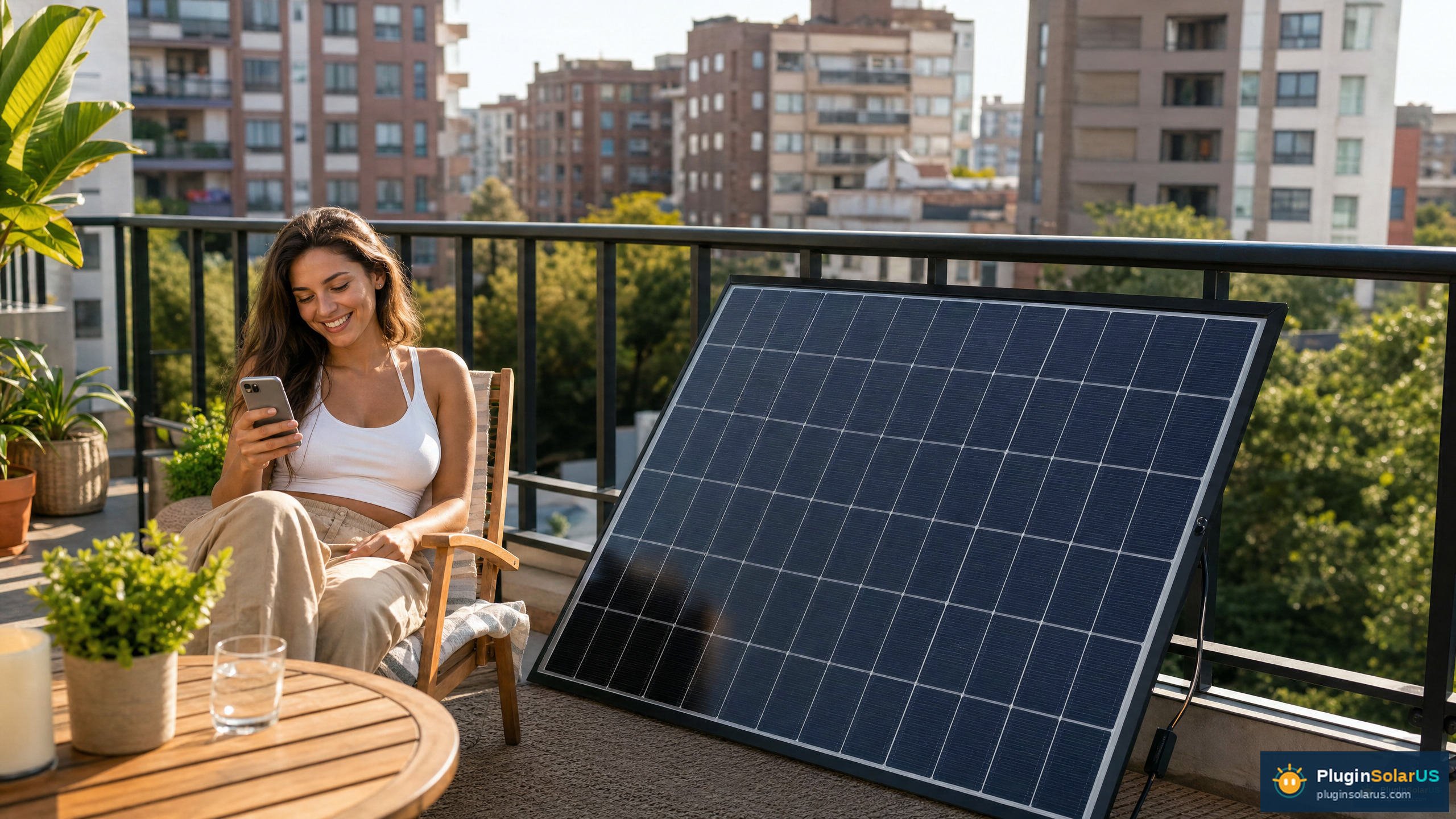
Introduction to Plug-In Solar for Renters
For renters, solar power has often felt out of reach. But a new class of plug-in solar systems—also called balcony or apartment solar—is changing that. These systems let you generate your own electricity by simply plugging them into a dedicated outlet, reducing your energy bills and environmental impact without permanent installations.
This guide covers the essential information renters need to go solar. We’ll explore the legal landscape, from landlord and HOA rules to the crucial GFCI outlet requirement and the definition of a ‘portable’ system. Our goal is to provide the clarity you need to make an informed decision.
The Basics of Plug-In Solar for Renters
Plug-in solar systems are simple and flexible, ideal for renters. They use solar panels, microinverters, and a plug to connect to your home’s electrical system. The generated electricity offsets consumption, reducing grid reliance.
System Sizing Tiers
Plug-in solar systems come in various sizes to suit different energy needs and living situations. Here’s a breakdown of common sizing tiers:
| Tier | Panel Wattage (W) | Battery Capacity (kWh) |
|---|---|---|
| Starter | 400–800 | 1–2 |
| Mid-Range | 800–1,600 | 2–3 |
| High Output | 1,600–2,400 | 3–5+ |
Battery Capacity Tiers
Integrating battery storage with your plug-in solar system can significantly enhance its benefits, allowing you to store excess energy generated during the day for use at night or during peak demand periods. This can further optimize your savings, especially in states with Time-of-Use (TOU) electricity rates.
| Tier | Battery Capacity (kWh) |
|---|---|
| Entry | 1–2 |
| Standard | 2–3 |
| Extended | 3–5+ |
The Critical GFCI Outlet Requirement
Safety First: GFCI Outlets Are Non-Negotiable
Plug-in solar systems MUST connect to a GFCI-protected outlet on a dedicated circuit. This is not merely a recommendation but a critical safety requirement to prevent electrical hazards. Connecting to a standard, non-GFCI outlet or a shared circuit can pose serious risks and is non-compliant with electrical codes. Refer to NEC Articles 690 and 705 for detailed requirements.
Plug-in solar systems aren’t just ‘plug-and-play.’ While easy to install, strict adherence to electrical safety standards, especially for GFCI outlets and dedicated circuits, is critical. The National Electrical Code (NEC) Articles 690 and 705 specifically address solar photovoltaic systems and interconnected power sources, outlining stringent requirements for safe and compliant installations. Furthermore, adherence to UL 3700, the safety standard for plug-in grid-interactive power conversion equipment, is increasingly becoming a mandatory requirement, as seen in Utah’s HB 340. Failure to comply with these codes and standards can lead to electrical hazards, equipment damage, and potential legal liabilities, making it imperative for renters to prioritize safety and compliance.
Understanding Renter Solar Rights: Landlords vs. HOAs
Two key players can impact a renter’s ability to install plug-in solar: landlords and Homeowners Associations (HOAs). Their rules and authority differ, so it’s important to understand both.
Landlord Rights and Lease Agreements
Your lease agreement with your landlord dictates what modifications you can make. Most leases prohibit significant alterations without consent. Plug-in solar, even if portable, might be a grey area depending on your lease and landlord’s interpretation.
Key Considerations for Landlord Approval:
- Lease Review: Thoroughly examine your lease for clauses related to exterior modifications, electrical alterations, or the installation of fixtures. Some leases may have blanket prohibitions, while others might be more permissive.
- Open Communication: Communicate openly with your landlord. Present a clear proposal detailing the system type, safety features (like GFCI), and its non-permanent nature. Highlight benefits like reduced bills and environmental impact.
- Non-Structural vs. Structural: Landlords are generally more amenable to installations that are clearly non-structural and easily removable without causing damage. This is where the definition of ‘portable/non-structural’ becomes critical.
Homeowners Association (HOA) Regulations
If your rental is in an HOA, expect additional regulations. HOAs have CC&Rs governing aesthetics and modifications. While some states limit HOA solar restrictions, these often don’t apply to all system types or properties.
Key Considerations for HOA Approval:
- Review CC&Rs: Obtain a copy of the HOA’s CC&Rs and carefully review any sections related to exterior modifications, solar energy systems, or aesthetic guidelines. Some HOAs may have specific rules regarding the placement, size, or visibility of solar panels.
- Seek Pre-Approval: Even with state solar rights laws, seek HOA pre-approval. This prevents disputes and ensures compliance.
- Highlight Non-Permanent Nature: Emphasize the non-permanent and easily removable nature of plug-in solar systems. This can alleviate concerns about long-term aesthetic impacts or structural alterations.
Defining ‘Portable/Non-Structural’ Legally
The key to renter solar rights often lies in a simple distinction: is the system ‘portable’ and ‘non-structural’? This definition usually comes down to how it’s attached, how easily it can be removed, and whether it damages the property.
What Constitutes a Portable/Non-Structural System?
A portable or non-structural plug-in solar system is generally characterized by its ability to be easily installed and removed without causing permanent damage or requiring significant alterations to the property. Key features often include:
- No Permanent Fasteners: The system should not rely on permanent fasteners, such as screws or nails driven into the building’s structure, for support or stability. Instead, it might utilize weighted bases, temporary clamps, or freestanding mounts.
- Easy Disconnection: The electrical connection should be simple and easily reversible, typically involving plugging the system into a standard, GFCI-protected outlet. It should not require hardwiring or modifications to the building’s electrical panel.
- Minimal Aesthetic Impact: The system should be designed to minimize its visual impact on the property, often being relatively small and unobtrusive.
Legal Implications of the Definition
The legal definition of ‘portable/non-structural’ varies significantly by state laws, local ordinances, and the specific language in your lease agreement or HOA CC&Rs. In some jurisdictions, a system that meets the criteria outlined above may be considered personal property rather than a fixture, granting you greater flexibility in its installation and removal. This distinction is crucial because personal property generally has fewer restrictions than permanent fixtures. However, in other areas, the definition might be more stringent, requiring explicit permission even for seemingly minor installations, especially if they are perceived to alter the exterior appearance or electrical system of the property. Always consult local regulations and your lease for precise guidance.
State-by-State Guide to Renter Solar Rights
The landscape of renter solar rights is complex and constantly evolving, with significant variations across all 50 states. While some states have enacted progressive legislation to protect and promote solar access, others lag behind, leaving renters with limited options. This section provides a comprehensive overview of the current state of renter solar rights, highlighting key legislative developments and practical considerations.
The National Landscape: A Patchwork of Policies
Without a unified federal policy, renter solar rights vary significantly by state. Your ability to install plug-in solar depends on local regulations. Some states limit landlord/HOA restrictions, while others defer to property owners.
Utah: Leading the Charge with HB 340
Utah leads in plug-in solar rights. In 2025, HB 340 explicitly legalized systems under 1,200W, exempting them from interconnection permits and simplifying installation for renters and homeowners.
Key Provisions of Utah HB 340:
- Permit Exemption: Systems under 1,200W are exempt from the often-cumbersome interconnection permitting process, reducing administrative hurdles and costs.
- Safety Standards: The law mandates adherence to UL 3700, the safety standard for plug-in grid-interactive power conversion equipment, ensuring that installations meet rigorous safety requirements.
- Clarity and Certainty: By explicitly legalizing plug-in solar, HB 340 provides much-needed clarity and certainty for renters, landlords, and utility companies, fostering a more supportive environment for solar adoption.
California: Signed SB 868 and Renter Planning
California Governor Newsom signed SB 868, the Plug and Play Solar Act, on September 30, 2026. The new utility-side framework is expected January 1, 2027. It does not grant an unconditional installation right against a landlord or HOA; continue following the lease, electrical code and current utility process until then.
Key Aspects of Signed California SB 868 (When Effective):
- Legislative Progress: Passed both chambers in August 2026 and signed September 30. The qualifying-device framework is expected to take effect January 1, 2027.
- Focus on Plug-In Solar: Unlike previous legislation (such as AB-2316, which focused on community solar), SB 868 specifically addresses the unique challenges and opportunities associated with plug-in solar systems.
- Potential Impact: The signed law sets a utility-side path for qualifying plug-in devices, while renters must still check their lease, landlord, building and property requirements.
The Rest of the Nation: Navigating the Grey Areas
Most states have grey areas for renter solar rights, governed by leases, HOA rules, and property laws. Existing “solar access laws” often target rooftop installations, not explicitly covering plug-in systems.
General Guidance for Renters in Other States:
- Review Local Ordinances: Check your local municipal codes and ordinances for any regulations related to solar energy systems, exterior modifications, or electrical installations.
- Consult Your Lease: Carefully review your lease agreement for any clauses that might prohibit or restrict the installation of a plug-in solar system.
- Engage with Your Landlord: Open communication is key. Present a clear and well-reasoned proposal to your landlord, highlighting the safety features (such as the GFCI requirement and adherence to UL 3700) and the non-permanent nature of the system.
- Seek Legal Advice: If you encounter significant resistance or are unsure about your rights, consider consulting with a legal professional specializing in property or environmental law.
Financial Considerations: Payback Periods and Incentives
While plug-in solar offers environmental benefits, financial implications often drive renter interest. Understanding costs, savings, and incentives is crucial.
Payback Periods: When Will Your System Pay for Itself?
The payback period—when solar savings equal initial cost—is key. For plug-in systems, it varies significantly based on system cost, local electricity rates, and energy consumption.
Average Payback Periods:
- National Average: National average payback for plug-in solar is 5-7 years, assuming average system cost and $0.18/kWh electricity rates.
- High-Rate States: In high-rate states like California ($0.34/kWh), Massachusetts ($0.32/kWh), and Connecticut ($0.28/kWh), payback can be 3-5 years, especially with TOU optimization.
The Federal ITC: A Fading Opportunity
The Federal Investment Tax Credit (ITC) historically incentivized solar. However, its current status is crucial to understand.
Important Update on the Federal ITC
The 30% Federal ITC expired on December 31, 2025. It is no longer available for new purchases made in 2026 or beyond. However, if you purchased and installed a qualifying system before the expiration date, you may still be able to claim the credit on your 2025 tax returns.
Conclusion: Empowering Renters with Plug-In Solar
Renter solar rights are evolving due to tech, legislation, and demand for clean energy. Despite landlord/HOA challenges, plug-in solar offers a viable option for renters nationwide.
Understanding legal nuances, adhering to safety standards (GFCI, UL 3700), and communicating with property owners empowers renters to use solar. With states like Utah leading and California considering similar measures, renter solar rights have a bright future.
Energy Resilience: A Growing Reason for Renter Solar Rights
The push for renter solar rights is increasingly driven not just by economics, but by energy resilience — the ability to keep essential devices running during grid outages. Renters are disproportionately affected by power outages: they cannot install whole-home generators, cannot add rooftop solar, and often live in multi-family buildings where shared electrical infrastructure limits their options.
Plug-in solar with battery storage changes this. A 2 kWh battery system can power a refrigerator for 24–30 hours, keep phones and medical devices charged, and maintain lighting and internet through a multi-day outage — all without requiring any structural modification to the property. This is particularly relevant for renters in:
- Wildfire-prone states (California, Oregon, Colorado) where utilities conduct Public Safety Power Shutoffs lasting days at a time
- Hurricane zones (Florida, Texas, Louisiana, the Carolinas) where outages after major storms can last weeks
- Extreme heat regions where grid stress during heat waves causes rolling blackouts
- Rural areas where repair crews take longer to restore power after storms
Several state bills advancing in 2026 explicitly cite grid resilience and emergency preparedness as justifications for renter solar rights, alongside the environmental and economic arguments. As the grid becomes less reliable, the resilience case for plug-in solar will only strengthen — and with it, the political momentum for renter solar rights legislation.
Next Steps
Ready to take the next step towards energy independence? Here’s our recommended path to get started with plug-in solar:
- Assess Your Readiness: Start by evaluating your living situation and energy needs with our comprehensive Readiness Guide.
- Communicate with Your Landlord: Utilize our Letter Generator to create a professional and persuasive proposal for your landlord.
- Make an Informed Purchase: Finally, consult our Buyer's Guide to select the right plug-in solar system for your needs and budget.