Property Manager's Guide to Plug-In Solar: Policy, Liability, and Opportunity
By PlugInSolarUS Editorial Team · Published 2026-03-20 · Updated October 1, 2026 · 23 min read
25+ states are advancing legislation that gives tenants the right to install plug-in solar. Here is what property managers need to know — and how to turn it into a competitive advantage.
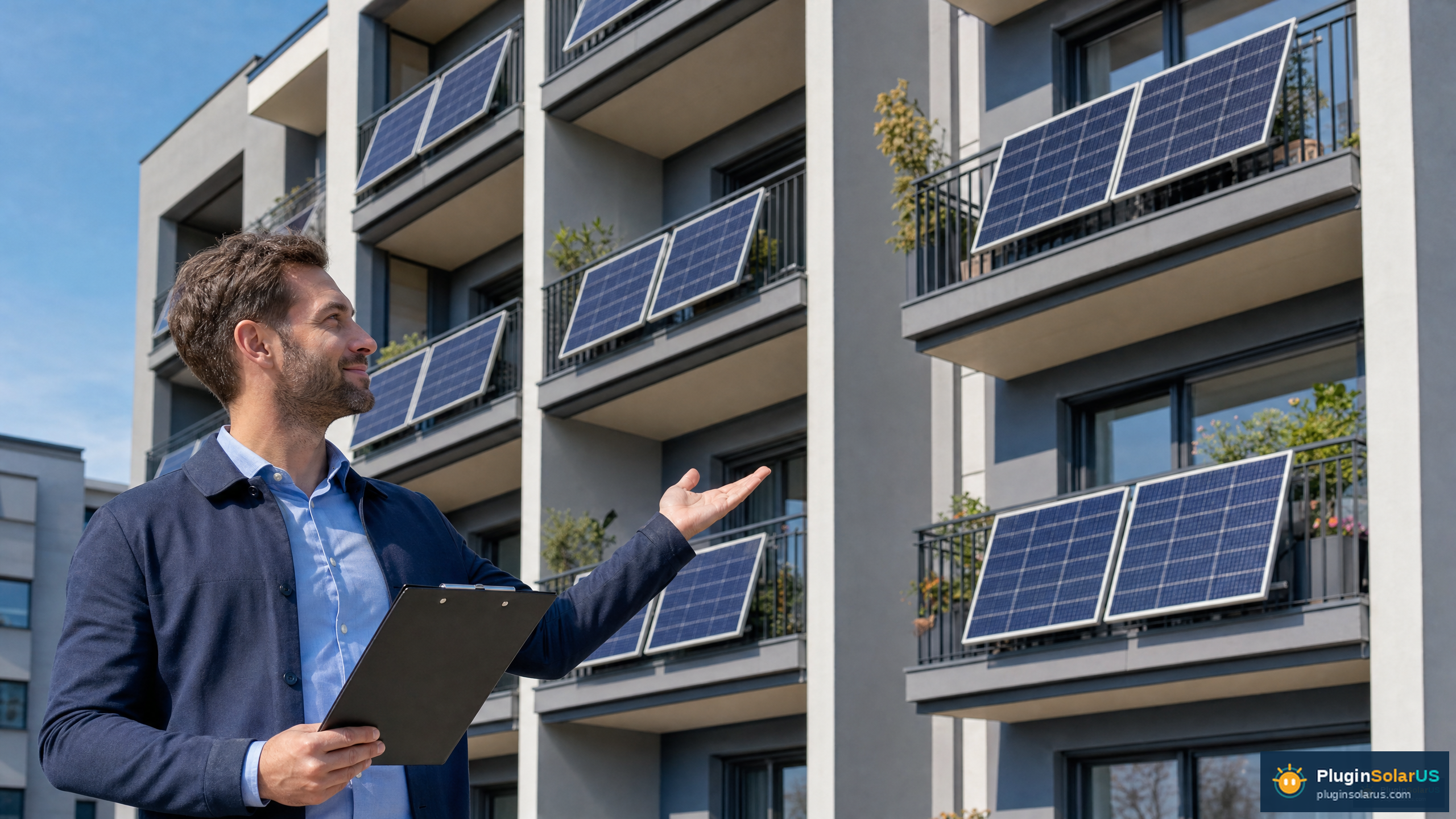
The Growing Tenant Demand for Plug-In Solar and Why Property Managers Need a Policy NOW
The landscape of residential energy consumption is undergoing a significant transformation, driven by a confluence of environmental awareness, economic pressures, and technological advancements. Tenants, increasingly conscious of their carbon footprint and seeking greater control over their utility expenses, are actively exploring sustainable energy solutions. Among these, plug-in solar systems have emerged as a particularly attractive option, offering a low-barrier entry point into renewable energy generation. These systems, designed for simplicity and portability, allow renters to directly participate in solar energy without the complexities and long-term commitments typically associated with traditional rooftop installations. This burgeoning interest is not merely a niche trend but a widespread movement that property managers can no longer afford to overlook.
The appeal of plug-in solar lies in its inherent flexibility and immediate benefits. Tenants can easily install these compact systems on balconies, patios, or in sunny windows, plugging them directly into a standard electrical outlet to offset a portion of their electricity consumption. This accessibility empowers renters to reduce their energy bills, often significantly, especially in regions with high electricity rates like California ($0.34/kWh), Massachusetts ($0.32/kWh), and Connecticut ($0.28/kWh). The national average electricity rate of $0.18/kWh still presents a compelling case for savings. Beyond the financial incentives, there's a strong desire among tenants to contribute to a greener future, and plug-in solar provides a tangible way to do so, fostering a sense of environmental stewardship and energy independence that resonates deeply with modern renters.
For property managers, this escalating tenant demand presents both an opportunity and a challenge. Without a clear, well-defined policy, managers risk facing a patchwork of unauthorized installations, potential safety hazards, and legal ambiguities. Proactive engagement, through the development and implementation of a comprehensive plug-in solar policy, is no longer optional but a strategic imperative. Such a policy not only ensures compliance with safety standards and local regulations but also positions the property as forward-thinking and tenant-centric, appealing to a growing demographic of environmentally conscious residents. Establishing a policy now allows property managers to guide this trend responsibly, mitigate risks, and potentially leverage plug-in solar as a valuable amenity.
Legal Framework: What Tenants Can and Cannot Do Under State Law
The legal landscape surrounding plug-in solar for renters is evolving, with states beginning to address the rights of tenants to install and operate these systems. Historically, the focus of solar legislation has been on homeowners, leaving a significant gap for the rental market. However, as plug-in solar gains traction, legislative bodies are starting to recognize the need for clear guidelines. It's crucial for property managers to understand that tenant rights regarding solar installations can vary dramatically by jurisdiction, ranging from explicit protections to outright restrictions. Navigating this complex legal environment requires diligence and an awareness of both current statutes and pending legislation.
As of June 2026, eight states have enacted explicit plug-in solar laws: Utah (HB 340, March 2025), Maine (LD 1730, April 6, 2026), Virginia (HB 395, April 22, 2026), Colorado (HB 26-1007, May 7, 2026), Maryland (HB 1532, May 12, 2026), Connecticut (HB 5340, May 20, 2026), New Hampshire (SB 540-FN, June 2026), and Vermont (S. 202, June 16, 2026). All eight laws apply to renters and homeowners alike, establishing clear frameworks for installation without utility permits. New York's SUNNY Act is on Governor Hochul's desk. Property managers in all these states should be familiar with these laws now.
Given the varied legal landscape, property managers must conduct thorough research into their specific state and local ordinances. What is permitted in one state may be restricted in another, and ignorance of the law is not a viable defense. The absence of explicit legislation does not necessarily mean plug-in solar is prohibited, but it often defaults to the discretion of the property owner or manager, making a clear policy even more critical. Understanding these legal nuances is the first step in crafting a policy that is both compliant and fair, protecting the interests of both the property and its residents. The table below provides a snapshot of the current legal status in various states, highlighting the patchwork nature of tenant solar rights.
State-by-State Tenant Solar Rights Overview
| State | Status | Key Provisions / Notes |
|---|---|---|
| Utah | Permitted (Enacted) | HB 340 (2025): Legalizes plug-in solar under 1,200W, exempt from interconnection permits. |
| California | Pending | SB 868 signed September 30, 2026; new utility-side framework expected January 1, 2027. Lease, property and electrical requirements still apply. |
| Massachusetts | Restricted/Unclear | No specific tenant plug-in solar laws. Default to landlord discretion and utility interconnection rules. |
| Colorado | Unclear/Emerging | Some local initiatives, but no statewide tenant solar rights. Utility rules apply. |
| New York | Restricted/Unclear | Focus on community solar. Tenant plug-in solar rights not explicitly defined. |
| Oregon | Unclear/Emerging | Growing interest, but no specific legislation for tenant plug-in solar. |
| Arizona | Restricted/Unclear | Strong solar market, but tenant rights for plug-in systems are not codified. |
| Texas | Restricted/Unclear | Deregulation complicates matters; no specific tenant plug-in solar rights. |
| Florida | Restricted/Unclear | Focus on large-scale solar. Tenant plug-in solar not addressed in state law. |
| Washington | Unclear/Emerging | Some green building initiatives, but no specific tenant plug-in solar rights. |
GFCI Outlet Requirement: What Property Managers Need to Know About Electrical Safety
Electrical safety is paramount in any residential property, and the introduction of plug-in solar systems necessitates a clear understanding of the associated electrical requirements. A critical component for the safe operation of plug-in solar is the use of a Ground Fault Circuit Interrupter (GFCI) outlet. This requirement is not merely a suggestion but a fundamental safety measure designed to protect both the property and its occupants from electrical hazards. Property managers must be acutely aware of this standard and ensure that any plug-in solar installation on their premises adheres strictly to it, as outlined by relevant electrical codes and industry best practices.
The National Electrical Code (NEC) Articles 690 (Solar Photovoltaic (PV) Systems) and 705 (Interconnected Electric Power Production Sources) provide the foundational guidelines for solar installations, including plug-in systems. While these articles primarily address larger, grid-tied systems, the principles of electrical safety, particularly concerning grounding and fault protection, are universally applicable. A GFCI outlet is specifically designed to detect ground faults – unintended paths for electricity to flow to the ground – and rapidly shut off power, thereby preventing electric shock. For plug-in solar, which introduces a power-generating device into a standard electrical circuit, a dedicated GFCI circuit is essential to isolate the system and ensure that any fault is immediately addressed without impacting other circuits or posing a risk to individuals.
Property managers should verify that any outlet intended for plug-in solar use is indeed a dedicated GFCI circuit. This means the circuit should not be shared with other high-draw appliances or multiple outlets, minimizing the risk of overloading and ensuring the GFCI can perform its protective function effectively. Regular electrical inspections by qualified electricians can help confirm the integrity and suitability of existing outlets. Furthermore, educating tenants about the importance of using only GFCI-protected, dedicated circuits for their plug-in solar systems is a vital step in preventing accidents and maintaining a safe living environment. Neglecting this critical safety requirement could lead to severe electrical hazards, property damage, and significant liability for the property manager.
Safety First: GFCI Outlets
Plug-in solar systems MUST be connected to a dedicated GFCI outlet, as mandated by NEC Articles 690 and 705. This is a non-negotiable safety requirement to prevent electrical shock and ensure system integrity.
How to Create a Plug-In Solar Policy — Sample Policy Language with 5 Specific Clauses
Developing a clear and comprehensive plug-in solar policy is essential for property managers to effectively manage tenant installations, ensure safety, and protect property assets. A well-crafted policy provides tenants with transparent guidelines, minimizes misunderstandings, and establishes a framework for responsible energy generation. This policy should be integrated into lease agreements or provided as an addendum, ensuring all parties are aware of their rights and responsibilities. The goal is not to deter tenants from adopting solar, but to facilitate its safe and orderly integration into the property.
When drafting a policy, it's important to consider various aspects, including installation procedures, safety standards, maintenance, and liability. The policy should be easily understandable, avoiding overly technical jargon where possible, while still being precise about requirements. Consulting with legal counsel and electrical professionals during the drafting process can help ensure the policy is legally sound and technically accurate. Below are five specific clauses that can form the foundation of a robust plug-in solar policy, designed to address common concerns and provide clear directives for both tenants and property management.
By implementing a clear policy, property managers can transform a potential source of confusion into a streamlined process that benefits everyone. This proactive approach not only safeguards the property but also enhances tenant satisfaction by supporting their sustainable living choices. A thoughtfully designed policy demonstrates a commitment to modern amenities and responsible property management, reinforcing the property's appeal in a competitive rental market. Here are five essential clauses to consider for your plug-in solar policy:
Sample Plug-In Solar Policy Clauses
-
Tenant Application and Approval Process:
Tenants wishing to install a plug-in solar system must submit a formal application to property management for approval prior to installation. The application must include detailed specifications of the proposed system (e.g., wattage, battery capacity, manufacturer), proof of UL 3700 certification, and a diagram of the intended installation location. Approval is contingent upon compliance with all property rules, local ordinances, and electrical safety standards. Unauthorized installations are strictly prohibited and may result in immediate removal at the tenant's expense.
-
Electrical Requirements and Safety Standards:
All plug-in solar systems must be connected to a dedicated Ground Fault Circuit Interrupter (GFCI) protected outlet. The tenant is responsible for ensuring the electrical circuit is suitable for the system's wattage and does not exceed the circuit's capacity. Property management reserves the right to require an inspection by a licensed electrician, at the tenant's expense, to verify compliance with NEC Articles 690 and 705, and other applicable electrical codes. Any modifications to the property's electrical system must be performed by a licensed and insured electrician approved by property management.
-
Installation, Placement, and Aesthetics:
Plug-in solar systems must be installed in a manner that does not damage the property structure, interfere with common areas, or pose a hazard to other residents. Acceptable locations typically include private balconies, patios, or window sills, provided they do not obstruct views, egress, or create an unsightly appearance. Systems must be securely mounted to prevent dislodgement by wind or other environmental factors. Property management retains the right to dictate acceptable placement and may require adjustments or removal if aesthetic or safety concerns arise.
-
Maintenance, Repair, and Removal:
Tenants are solely responsible for the maintenance, repair, and proper functioning of their plug-in solar system. This includes ensuring the system remains clean, free of damage, and operating safely. Upon vacating the premises, tenants must remove their plug-in solar system and restore the installation area to its original condition, repairing any damage caused by the installation or removal. Failure to do so will result in charges for repair and removal costs.
-
Insurance and Liability:
Tenants are required to maintain renter's insurance with sufficient liability coverage that explicitly includes the plug-in solar system. Property management and the property owner must be named as additional insureds on the policy. The tenant assumes all risks and liabilities associated with the installation, operation, and removal of their plug-in solar system, and agrees to indemnify and hold harmless property management and the property owner from any claims, damages, or losses arising from the system.
Insurance and Liability: What Your Policy Covers and What It Doesn't
The integration of plug-in solar systems into rental properties introduces new considerations for insurance and liability. Property managers must understand the extent to which their existing property insurance policies cover incidents related to tenant-installed solar devices, and where potential gaps in coverage may exist. It's a common misconception that all property damage or liability arising on the premises is automatically covered by the landlord's policy. However, tenant-owned equipment, especially power-generating devices, often falls into a gray area that requires careful examination and potentially additional measures.
Typically, a property manager's master insurance policy covers the building structure and common areas, as well as liability for incidents occurring in those spaces. However, tenant-owned personal property, including plug-in solar systems, is generally not covered under the landlord's policy. More critically, liability arising from the tenant's installation, operation, or malfunction of their solar system may also not be fully covered. For instance, if a poorly installed system causes an electrical fire or injures another tenant, the landlord's policy might deny coverage, arguing that the incident stemmed from the tenant's personal equipment and actions. This potential exposure highlights the importance of clear policy language and tenant requirements.
To mitigate these risks, property managers should mandate that tenants carry comprehensive renter's insurance with adequate liability coverage, explicitly naming the property management and owner as additional insureds. This ensures that in the event of an incident related to the plug-in solar system, there is a primary layer of coverage from the tenant's policy. Furthermore, the property's plug-in solar policy should clearly state that the tenant assumes all risks and liabilities associated with their system. Regular review of insurance policies with an insurance professional is advisable to ensure that all potential liabilities are addressed, and that the property manager is adequately protected against unforeseen circumstances arising from the growing trend of tenant-installed solar.
UL 3700 Certification for Tenant Plug-In Solar Systems
UL 3700 is the U.S. safety certification standard developed specifically for plug-in photovoltaic equipment and systems. It addresses the complete plug-in configuration and the safety challenges created when interactive solar equipment connects through a plug-and-receptacle interface, including overcurrent protection, touch safety, and interaction with ground-fault protection.
A property policy can require equipment certified to UL 3700 where that requirement is consistent with applicable law. Certification does not by itself resolve placement, mounting, circuit, utility, landlord, association, permit, or local-code requirements, and some state laws allow a comparable standard or another NRTL certification pathway. The policy should therefore identify UL 3700 as the plug-in solar certification standard while preserving the requirements that apply in the property's jurisdiction.
The Bulk Installation Opportunity: How Property Managers Can Offer Plug-In Solar as an Amenity
While individual tenant installations are a growing trend, property managers also have a significant opportunity to proactively integrate plug-in solar as a property-wide amenity. Instead of merely reacting to tenant requests, a bulk installation approach allows property managers to control the quality, safety, and aesthetics of solar integration, while simultaneously enhancing the property's value and appeal. This strategy transforms plug-in solar from a tenant-driven initiative into a premium feature that can attract and retain residents, positioning the property as a leader in sustainable living.
A bulk installation could involve strategically placing plug-in solar systems in common areas, such as rooftops or designated outdoor spaces, or even providing pre-installed systems on balconies of select units. This approach allows for professional installation, ensuring adherence to all electrical codes and safety standards from the outset. Property managers can also negotiate bulk purchasing discounts for systems, potentially reducing the per-unit cost and making the investment more financially attractive. Furthermore, by owning and managing the systems, property managers can ensure consistent maintenance and optimal performance, providing a seamless experience for tenants.
Offering plug-in solar as an amenity can be a powerful differentiator in a competitive rental market. It appeals to environmentally conscious tenants, offers tangible savings on electricity bills, and showcases the property's commitment to sustainability. Property managers can integrate the cost of these systems into rental fees or offer them as an optional upgrade, creating new revenue streams while providing a highly desirable feature. This proactive approach not only addresses the growing demand for solar but also allows property managers to shape the narrative, control the implementation, and reap the benefits of a greener, more attractive property portfolio. Consider system sizing tiers like Starter (400–1,200W + 1–2 kWh), Mid-Range (800–1,600W + 2–3 kWh), and High Output (1,600–2,400W + 3–5 kWh+) to cater to different tenant needs and property types.
Marketing Solar-Ready Properties to Attract and Retain Tenants
In today's competitive rental market, amenities play a crucial role in attracting and retaining high-quality tenants. As environmental awareness and energy costs continue to rise, properties that offer sustainable features, particularly solar energy options, gain a significant advantage. Marketing your property as "solar-ready" or actively promoting the availability of plug-in solar as an amenity can be a powerful strategy to differentiate your offerings and appeal to a growing demographic of eco-conscious and budget-savvy renters. This goes beyond simply allowing plug-in solar; it involves actively showcasing the benefits and ease of access to this modern convenience.
Highlighting the ability for tenants to reduce their electricity bills through plug-in solar is a compelling selling point. With national average electricity rates at $0.18/kWh, and significantly higher in states like California ($0.34/kWh), Massachusetts ($0.32/kWh), and Connecticut ($0.28/kWh), the promise of energy savings resonates deeply. Emphasize the potential for quicker payback periods, which can be 5–7 years nationally, and even 3–5 years in TOU (Time-of-Use) markets like CA, MA, and CT. This financial benefit, combined with the environmental advantages, creates a strong value proposition that can attract tenants looking for both economic relief and sustainable living options.
Beyond direct cost savings, marketing solar-ready properties also taps into the broader desire for modern, efficient, and environmentally responsible living spaces. Use your marketing materials to showcase the ease of installation, the safety measures in place (like GFCI outlets and UL 3700 compliance), and the positive impact on the environment. Feature testimonials from tenants who are already benefiting from plug-in solar. By actively promoting these aspects, property managers can cultivate a reputation as forward-thinking and tenant-supportive, leading to increased occupancy rates, reduced turnover, and a stronger brand image in the community. This strategic marketing not only fills vacancies but also fosters a loyal tenant base that values sustainability.
State-by-State Tenant Solar Rights Table (10 states)
Understanding the varying legal landscape for tenant solar rights across different states is crucial for property managers operating in multiple jurisdictions or those looking to expand. While some states are proactively enacting legislation to support tenant access to solar, others have yet to address the issue, leaving a patchwork of regulations and interpretations. This table provides a more detailed look at the status of tenant solar rights in ten key states, offering property managers a quick reference guide to navigate the complexities of plug-in solar policies.
The information presented here is based on current legislative actions and general legal interpretations. It is important to note that laws can change, and local ordinances may also play a significant role. Property managers should always consult with legal professionals familiar with local and state energy laws to ensure full compliance and to develop policies that are both robust and fair. This table serves as a starting point for understanding the general climate for tenant solar in these states.
The varying approaches reflect different legislative priorities, utility regulations, and levels of public advocacy for renewable energy. As the demand for plug-in solar continues to grow, more states may introduce legislation to clarify consumer and renter access. Governor Newsom signed California SB 868 on September 30, 2026; its utility-side framework is expected January 1, 2027 and does not override a lease or property rules. Staying informed about these developments is key to proactive property management and adapting to the evolving energy landscape.
| State | Tenant Solar Rights Status | Notes for Property Managers |
|---|---|---|
| Utah | Explicitly Permitted | HB 340 (2025) legalizes plug-in solar under 1,200W, exempting it from interconnection permits. Property managers should establish clear guidelines for system size and safety. |
| California | Pending Legislation | SB 868 signed September 30, 2026; expected effective January 1, 2027. Plan a safe, property-specific policy rather than treating signature as immediate installation permission. |
| Massachusetts | Landlord Discretion / Unclear | No specific state law for tenant plug-in solar. Policies must be established by property managers, adhering to utility interconnection rules. High electricity rates offer strong tenant incentive. |
| Colorado | Emerging / Local Initiatives | Some cities or counties may have specific rules. Statewide, it defaults to landlord policy and utility regulations. Encourage tenants to seek approval. |
| New York | Limited / Focus on Community Solar | State focus is on community solar and larger installations. Tenant plug-in solar is generally at landlord's discretion. Clear policies are essential. |
| Oregon | Unaddressed / Landlord Discretion | No specific state legislation. Property managers have significant control over policies. Emphasize safety and UL 3700 compliance. |
| Washington | Unaddressed / Landlord Discretion | Similar to Oregon, no specific state laws. Property managers should develop clear policies for tenant installations. |
| Maryland | Unaddressed / Landlord Discretion | No specific state laws. Property managers should develop clear policies for tenant installations. |
| New Jersey | Enacted Framework — Effective March 1, 2027 | P.L.2026, c.82 limits blanket landlord and association prohibitions under statutory conditions. Tenants must provide the landlord and applicable association at least 14 days' written notice with compliance documentation and the proposed location. |
| Arizona | Unaddressed / Landlord Discretion | Despite a strong solar market, tenant plug-in solar rights are not codified. Property managers must set clear guidelines. |
Frequently Asked Questions from Property Managers
As plug-in solar gains popularity, property managers often have a range of questions regarding its implementation, safety, and impact on their operations. Addressing these common concerns proactively can help streamline the process of developing and enforcing a plug-in solar policy. Here are some frequently asked questions, along with comprehensive answers, designed to provide clarity and guidance for property managers navigating this emerging energy trend.
These questions cover critical areas from system specifications to liability, reflecting the diverse challenges and opportunities presented by tenant-installed solar. Understanding these points is fundamental to creating a policy that is both fair to tenants and protective of the property's interests. By having clear answers to these FAQs, property managers can confidently engage with tenants, address their concerns, and ensure a smooth integration of plug-in solar into their properties.
The answers provided here are based on industry best practices, current regulations, and the critical facts provided. However, it is always recommended to consult with legal and electrical professionals for advice tailored to your specific property and jurisdiction. Staying informed and prepared is the best approach to managing the evolving landscape of residential energy solutions.
What are the typical sizes of plug-in solar systems tenants might install?
Plug-in solar systems come in various sizes, generally categorized by their wattage output and battery storage capacity. Common tiers include: Starter systems (400–1,200W + 1–2 kWh battery), ideal for offsetting basic appliance use; Mid-Range systems (800–1,600W + 2–3 kWh battery), suitable for more significant energy savings; and High Output systems (1,600–2,400W + 3–5 kWh+ battery), designed for tenants with higher energy demands. Property managers should specify acceptable wattage limits in their policy, often aligning with local utility interconnection rules or state laws like Utah HB 340, which exempts systems under 1,200W from permits.
Do plug-in solar systems require special electrical outlets?
Yes, plug-in solar systems require connection to a dedicated GFCI (Ground Fault Circuit Interrupter) outlet. This is a critical safety requirement, as outlined in NEC Articles 690 and 705, to prevent electrical shock and ensure the system safely interacts with the grid. A dedicated circuit means the outlet should not be shared with other appliances. Property managers should verify the presence and functionality of GFCI outlets and may require tenants to have an electrician inspect the circuit before approval.
What is UL 3700, and why is it important?
UL 3700 is the safety standard for plug-in grid-interactive power conversion equipment. It ensures that the inverter or microinverter components of a plug-in solar system meet rigorous safety criteria for electrical, fire, and mechanical integrity, as well as safe grid interaction (e.g., anti-islanding protection). Requiring UL 3700 certification for all tenant systems is crucial for property managers to guarantee the safety and reliability of the equipment, minimizing risks to the property and its occupants.
How long does it take for tenants to see a return on investment (payback period) for plug-in solar?
The payback period for plug-in solar systems varies depending on electricity rates, system cost, and local incentives. Nationally, the average payback period is 5–7 years. However, in states with high electricity rates and Time-of-Use (TOU) billing, such as California, Massachusetts, and Connecticut, the payback can be significantly shorter, often 3–5 years. This rapid return on investment is a major draw for tenants and a key selling point for solar-ready properties.
Are there any federal incentives for plug-in solar that tenants can claim?
The primary federal incentive for solar, the Investment Tax Credit (ITC), expired on December 31, 2025. While some state or local incentives may still exist, tenants should be advised to research current programs. Property managers should not rely on federal incentives as a primary driver for tenant adoption, but rather focus on the inherent energy savings and environmental benefits.
What if a tenant installs a system without approval?
An unauthorized installation poses significant safety and liability risks. A clear plug-in solar policy should explicitly state that unapproved installations are prohibited and subject to immediate removal at the tenant's expense. Property managers should enforce this policy consistently to maintain safety standards and prevent potential property damage or legal issues.
Next Steps to /property-managers then /readiness
Navigating the evolving landscape of plug-in solar requires property managers to be informed, proactive, and prepared. The information provided in this guide serves as a foundational resource to help you understand the critical aspects of tenant-installed solar systems, from legal frameworks and safety requirements to policy development and marketing opportunities. By taking deliberate steps, you can effectively manage this trend, enhance your property's appeal, and ensure a safe and sustainable environment for your residents.
Your journey towards a solar-ready property begins with a deeper dive into resources tailored specifically for property managers. Understanding the nuances of your role in this transition is paramount. Following this, assessing your property's current infrastructure and readiness for solar integration is the logical next step. These actions will empower you to make informed decisions and implement effective strategies.
To further your understanding and begin implementing a robust plug-in solar strategy, we recommend exploring the following resources:
Energy Resilience: A New Value Proposition for Property Managers
Beyond the financial and environmental benefits, energy resilience is becoming a significant factor in tenant decision-making — and a differentiator for forward-thinking property managers. Tenants in wildfire-prone, hurricane-zone, and extreme-heat regions are increasingly asking whether their building can support backup power solutions during outages.
Plug-in solar with battery storage is the most accessible resilience option for renters. Unlike whole-home generators (which require property modifications and fuel management) or rooftop solar (which requires structural work and landlord capital investment), plug-in systems are tenant-deployable, require no structural modifications, and can operate independently of the building's electrical system during outages.
For property managers, this creates a practical opportunity:
- Pre-install GFCI-protected dedicated circuits on balconies and patios as a standard amenity — a low-cost upgrade that enables tenant plug-in solar without case-by-case electrical assessments
- Include plug-in solar readiness in marketing materials as a differentiator, particularly in markets with high wildfire or hurricane risk
- Develop a clear written policy that permits UL 3700-certified plug-in systems, removing ambiguity for tenants and reducing the volume of individual approval requests
- Partner with a local installer to offer tenants a preferred pricing arrangement, creating goodwill and reducing the friction of adoption
Properties that proactively enable plug-in solar — rather than requiring tenants to navigate a slow approval process — are positioning themselves as resilience-ready, a designation that will only grow in value as grid reliability continues to decline.
- PlugInSolarUS for Property Managers: Discover more in-depth resources, tools, and support specifically designed to help property managers navigate the world of plug-in solar.
- Property Readiness Assessment: Evaluate your property's current electrical infrastructure and overall suitability for plug-in solar installations. This tool will help you identify necessary upgrades and prepare your property for the future of energy.