Why Existing Solar Installers Should Add Plug-In Solar to Their Offerings
By PlugInSolarUS Editorial Team · Published 2026-03-18 · Updated October 1, 2026 · 8 min read
Plug-in solar is not a competitor to rooftop solar — it is a complementary product line that expands your addressable market by 44 million renters. Here is the strategic case.
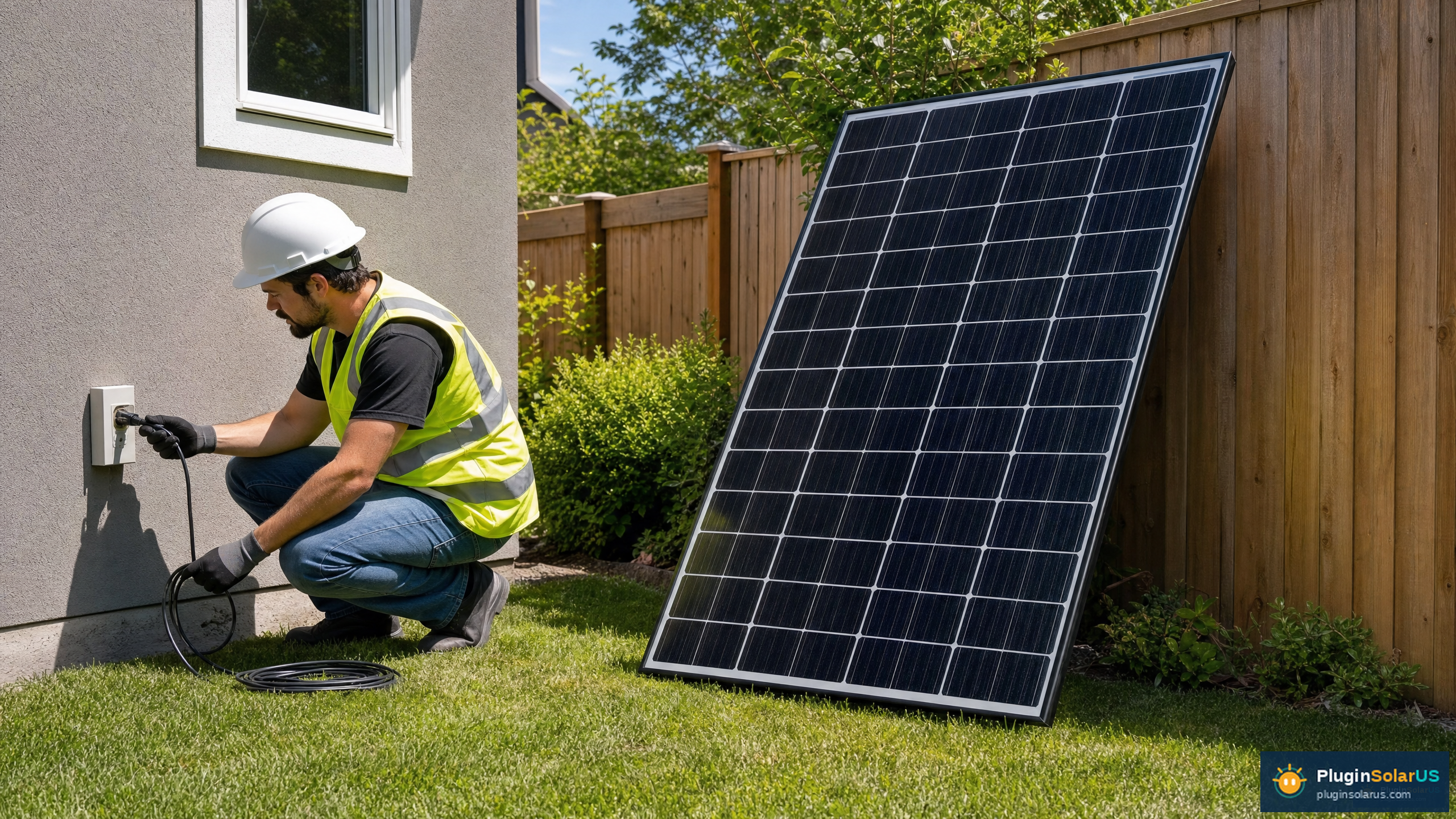
Why Existing Solar Installers Should Add Plug-In Solar to Their Offerings
The solar industry is rapidly evolving, and with it, new opportunities emerge for forward-thinking installers. While traditional rooftop installations remain a cornerstone, the burgeoning market for plug-in solar (also known as balcony solar or apartment solar) presents a significant, often overlooked, revenue stream. This segment caters to a vast demographic previously underserved: renters, apartment dwellers, and homeowners seeking simpler, more flexible, and less invasive solar solutions. By integrating plug-in solar into your offerings, you can tap into this growing demand, diversify your services, and future-proof your business.
Plug-in solar systems are designed for ease of installation and portability, making them ideal for individuals who cannot or prefer not to commit to a full-scale rooftop system. This article will guide existing solar installers through the operational, technical, and market considerations necessary to successfully add plug-in solar to their service portfolio, ensuring compliance, profitability, and customer satisfaction.
The Untapped Market: Plug-In Solar's Growth Potential
The demand for sustainable energy solutions is at an all-time high, yet a significant portion of the population remains excluded from traditional solar ownership due to property ownership restrictions, high upfront costs, or complex installation processes. Plug-in solar bridges this gap, offering an accessible entry point into renewable energy. This market includes:
- Renters: Who often lack the authority to modify their living spaces for traditional solar.
- Apartment & Condo Dwellers: With limited roof access but ample balcony or patio space.
- Homeowners: Seeking supplemental power, energy independence, or a lower-cost entry into solar without the commitment of a large installation.
- DIY Enthusiasts: Who appreciate the simplicity of a plug-and-play system but may still require professional guidance for optimal setup and safety.
The simplicity of these systems—often requiring little more than plugging into a standard outlet—belies their significant impact on energy bills and carbon footprints. For installers, this means a broader customer base, quicker project turnaround times, and a chance to build relationships with clients who may eventually transition to larger systems.
Operational Deep Dive: Integrating Plug-In Solar into Your Business
Adding plug-in solar requires a nuanced understanding of its unique technical and regulatory landscape. While simpler than traditional solar, it demands adherence to specific safety and electrical standards.
Understanding Electrical Requirements: GFCI Outlets and Dedicated Circuits
Critical Safety Notice
Plug-in solar systems MUST connect to a GFCI-protected outlet on a dedicated circuit. It is crucial to emphasize that connecting to just any standard outlet is unsafe and non-compliant. This ensures proper fault protection and prevents overloading shared circuits. Adherence to NEC Articles 690 and 705 is paramount for safe and legal installations.
For installers, this means assessing the client's existing electrical infrastructure. Many older buildings may not have readily available GFCI-protected dedicated circuits, presenting an opportunity for additional electrical upgrade services. A thorough site assessment should always include:
- Verification of GFCI protection at the intended outlet.
- Confirmation that the circuit is dedicated and not shared with other high-draw appliances.
- Assessment of the circuit breaker size to ensure it can safely handle the solar input without tripping.
UL 3700 Safety Standard: The Benchmark for Plug-In Systems
The UL 3700 standard is critical for plug-in solar. It specifies safety requirements for grid-interactive power conversion equipment, ensuring that these systems can safely connect to and interact with the electrical grid. Compliance with UL 3700 is not just a best practice; it is increasingly becoming a regulatory requirement. For example, Utah HB 340 (2025), the first enacted US law explicitly legalizing plug-in solar, mandates UL 1741 compliance for systems under 1,200W to be exempt from interconnection permits. All pending state bills also reference this standard.
As an installer, ensuring that the plug-in solar equipment you offer is UL 3700 certified is non-negotiable. This provides peace of mind for your customers and protects your business from liability.
Navigating Permitting and Interconnection: State-Specific Regulations
While plug-in solar aims for simplicity, permitting and interconnection rules vary significantly by state and even by local jurisdiction. Understanding these nuances is key to smooth operations.
- Utah HB 340 (2025): This landmark legislation exempts plug-in solar systems under 1,200W from interconnection permits, streamlining the process significantly in Utah.
- California SB 868 (Plug and Play Solar Act, 2026): Governor Newsom signed California SB 868 on September 30, 2026. Its new utility-side framework is expected January 1, 2027; current utility, electrical, landlord and property rules still apply until then. The signed text calls for qualifying equipment certification (UL or equivalent NRTL) but does not name UL 3700; AB-2316 was a separate community-solar bill.
For other states, installers must research local utility and municipal regulations. Often, a simple notification to the utility company is required, even if a full interconnection agreement is not. Proactively understanding and communicating these requirements to clients will build trust and prevent delays.
Training Requirements for Installers
While plug-in solar is less complex than large-scale installations, specialized training ensures safety, efficiency, and customer satisfaction. Key areas of training include:
- Electrical Safety: In-depth understanding of GFCI operation, dedicated circuits, and safe electrical practices specific to plug-in systems.
- NEC Articles 690 & 705: Comprehensive knowledge of these articles as they apply to plug-in solar installations. (Note: NEC Article 625 pertains to EV charging and is not applicable here.)
- UL 3700 Compliance: Training on identifying and verifying UL 3700 certified equipment and understanding its implications.
- System Sizing & Configuration: Expertise in matching system components (panels, inverters, batteries) to customer needs and electrical capacity.
- Customer Education: Ability to clearly explain system operation, safety protocols, and maintenance to end-users.
- Permitting & Interconnection Procedures: Staying updated on local and state regulations to guide customers through the necessary paperwork.
Consider offering certifications or specialized workshops for your technicians to become experts in plug-in solar, differentiating your business in this niche market.
Strategic Stocking: Which System Tiers to Offer
To effectively serve the plug-in solar market, offer a range of system sizes that cater to different energy needs and budgets. Here are the recommended sizing tiers:
- Starter Systems: Ideal for beginners or those with minimal energy needs.
- Panel Capacity: 400–1,200W
- Battery Capacity: 1–2 kWh (Entry tier)
- Target Audience: Renters, small apartments, supplemental power for specific appliances.
- Mid-Range Systems: A balanced option for increased energy independence.
- Panel Capacity: 800–1,600W
- Battery Capacity: 2–3 kWh (Standard tier)
- Target Audience: Larger apartments, small homes, significant reduction in electricity bills.
- High Output Systems: For maximum energy generation and storage.
- Panel Capacity: 1,600–2,400W
- Battery Capacity: 3–5 kWh+ (Extended tier)
- Target Audience: Homeowners, those with higher energy consumption, maximizing self-consumption.
Offering these distinct tiers allows you to meet diverse customer demands and upsell clients as their energy needs or interest in solar grows. Partnering with reliable suppliers for each tier is crucial for consistent quality and availability.
Partnership Models with Property Managers
A significant portion of the plug-in solar market consists of renters. Establishing partnerships with property managers and homeowner associations (HOAs) can unlock access to entire communities. Consider these partnership models:
- Preferred Installer Programs: Become the go-to installer for plug-in solar within a property manager's portfolio.
- Educational Workshops: Offer free informational sessions to residents on the benefits and safety of plug-in solar, co-hosted with property management.
- Bulk Installation Discounts: Provide incentives for property managers to facilitate multiple installations within their properties.
- Streamlined Approval Processes: Work with property managers to create a simplified approval process for residents wishing to install plug-in solar.
- Maintenance & Support Agreements: Offer ongoing support and maintenance packages for systems installed within managed properties.
These partnerships can lead to consistent lead generation and establish your company as a trusted expert in the multi-family dwelling solar market.
Marketing to Renters: Tailored Strategies
Marketing plug-in solar to renters requires a different approach than traditional solar. Focus on benefits that resonate with their specific circumstances:
- Flexibility & Portability: Highlight that systems can be moved if they relocate.
- No Property Modifications: Emphasize that no permanent changes to the property are needed.
- Immediate Savings: Focus on the direct reduction in electricity bills.
- Environmental Impact: Appeal to their desire for sustainability.
- Energy Independence: The ability to generate their own power, even in a rented space.
Utilize digital marketing channels popular with renters, such as social media, local community groups, and partnerships with rental listing platforms. Create clear, concise messaging that addresses common renter concerns and showcases the ease of adoption.
Return on Investment (ROI) Comparison for Plug-In Solar
Understanding the financial benefits is crucial for both installers and customers. While the federal Investment Tax Credit (ITC) for new purchases expired on December 31, 2025 (though still claimable on 2025 tax returns), plug-in solar still offers compelling payback periods, especially in high-rate states.
Federal ITC Update
The Federal Investment Tax Credit (ITC) for new solar purchases expired on December 31, 2025. It is no longer available for new plug-in solar system purchases made in 2026 or beyond. However, customers who purchased systems in 2025 can still claim the 30% credit on their 2025 tax returns.
Here's a comparison of payback periods based on average electricity rates:
| Region/State | Average Electricity Rate (per kWh) | Estimated Payback Period | Notes |
|---|---|---|---|
| National Average | ~$0.18 | 5–7 years | General estimate, varies by usage. |
| California (CA) | ~$0.34 | 3–5 years | With Time-of-Use (TOU) optimization. |
| Massachusetts (MA) | ~$0.32 | 3–5 years | With Time-of-Use (TOU) optimization. |
| Connecticut (CT) | ~$0.28 | 3–5 years | With Time-of-Use (TOU) optimization. |
These figures demonstrate that even without the federal ITC, plug-in solar remains a financially attractive investment, particularly in regions with higher electricity costs. Installers can leverage these statistics to make a compelling case to potential customers.
Conclusion: Seizing the Plug-In Solar Advantage
The plug-in solar market represents a significant growth opportunity for existing solar installers. By understanding the unique technical requirements, staying abreast of regulatory changes, strategically stocking system tiers, and developing targeted marketing and partnership strategies, your business can effectively tap into this expanding customer base. Offering plug-in solar not only diversifies your service portfolio but also positions your company at the forefront of accessible, sustainable energy solutions.
Energy Resilience: A New Sales Angle for Installers
The financial payback story has always been the primary sales narrative for solar. But a growing segment of customers — particularly in wildfire-prone, hurricane-zone, and rural markets — are motivated equally or primarily by energy resilience: the ability to keep essential devices running when the grid goes down.
Plug-in solar with battery storage is uniquely positioned to serve this market. Unlike grid-tied rooftop solar, which shuts down during outages due to anti-islanding requirements, plug-in systems with battery storage can operate in island mode, keeping connected loads live regardless of grid status. This is a meaningful differentiator that traditional solar installers cannot offer without a full battery retrofit.
For installers, the resilience angle opens several new customer segments:
- Renters and apartment dwellers who cannot install rooftop solar but want backup power for medical devices, refrigeration, and communication during outages
- Rural homeowners in areas with long outage restoration times who want a low-maintenance backup power source
- Homeowners with existing rooftop solar who want to add a plug-in battery circuit that stays live during grid outages (their rooftop system shuts down; the plug-in battery does not)
- Small businesses and home offices where even a brief outage causes significant productivity loss
When presenting plug-in solar to resilience-motivated customers, lead with concrete backup capacity figures: a 2 kWh system keeps a refrigerator running for 24–30 hours, powers LED lighting for 50+ hours, and maintains a Wi-Fi router for 130+ hours. Frame the financial payback as a bonus on top of the resilience value, rather than the primary justification.
Next Steps
Ready to expand your solar business into the plug-in market? Explore these resources:
- Learn more about how plug-in solar works: How It Works
- Understand the readiness assessment for plug-in solar: Plug-In Solar Readiness
- Calculate potential savings with our tool: Savings Calculator
- Dive deeper into battery storage options: Battery Guide
- Explore comprehensive buying advice: Buyer's Guide
- Generate a letter for your landlord or HOA: Letter Generator
- Discover state-specific regulations and incentives: States
- Resources for Renters and Homeowners
- Information for Electricians and Property Managers
- Join our community: Newsletter
- For installers, find more tailored resources here: Resources for Solar Installers
- Your ultimate next step for product selection: Go to the Buyer's Guide